

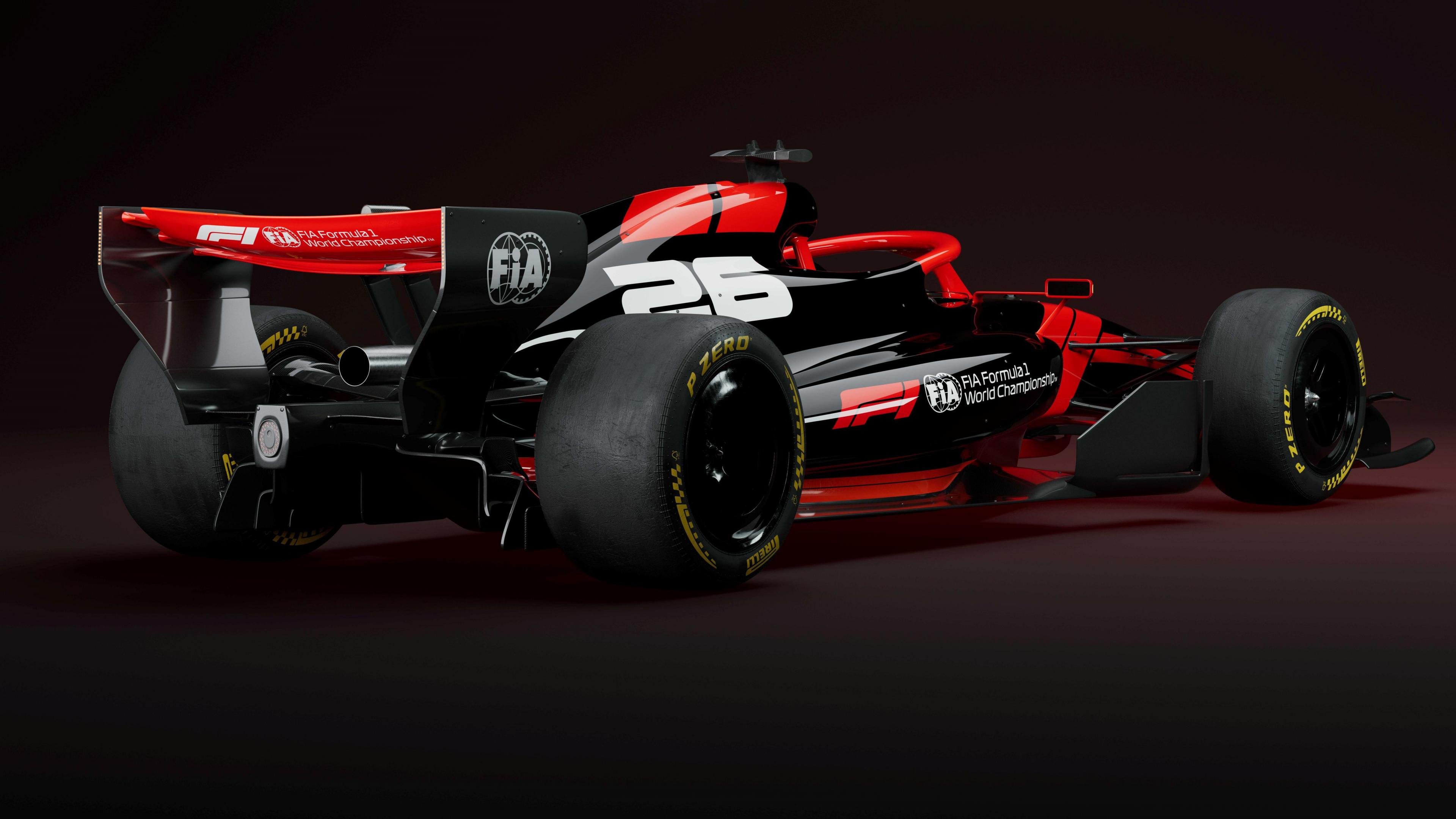
The vehicles for the 2026 season are set to be more compact, agile and eco-conscious compared to current models.
The world of Formula 1 has revealed the new language that will be used to reference the intricate details of its revolutionary 2026 rulebook.
The sport is implementing what is arguably the biggest technical shift in its illustrious history for the 2026 campaign, featuring new chassis and engine rules and the required adoption of eco-friendly fuels.
The revised engines, which keep the 1.6-litre V6 turbo hybrid, boast a greatly enhanced battery power, requiring significant developments in the vehicles' aerodynamic design.
During grand prix events, competitors will carefully oversee ERS energy – including during qualifying laps – to achieve the optimal result.
Wide-ranging research were carried out with a diverse audience, including new, casual and core fans, to identify which terminology would make things clearer of the key features of the new regulations.
The key objective was to present a series of complex features of the competition as easy to grasp as possible for the broadest viewership.
Consequently, previous placeholder terms for some systems – such as "x-mode and z-mode" for the moveable wings – have been discarded in preference for descriptive names that clearly indicate the primary purpose of the innovation.
Key Technical Innovations
According to rule-makers that competitors will have greater control to determine tactics regarding power usage, harvesting, and conservation.
The new regulations feature a set of functions that will be shown on broadcast screens to enhance the viewers' comprehension of the race battle.
- Passing Mode: This replaces the current DRS. It provides a short boost of battery power available when a car is less than a second the vehicle in front to assist with an pass.
- Extra Push Mode: This is a on-demand battery discharge from the hybrid system that can be used in offensive or defensive moves. It provides the pilot maximum power at the activation of a control.
Both of these crucial modes will have to be deployed strategically, as the overall battery capacity is strictly limited.
- Active Aerodynamics: Both the nose and rear wings adjust their angles – opening on the high-speed sections for reduced drag and top speed, and angling down in the turns for peak grip.
- Battery Recharge: Cars can replenish their battery with regenerative braking, or during coasting at the end of straights or in corners where only reduced throttle is applied.
What's Changing on the Cars?
The vehicles for the new era will be reduced in size and weight than this year, with a wheelbase cut by 200mm to 3,400mm, width cut by 100mm – down to 1,900mm – and the minimum weight lowered by 30kg.
Total aerodynamic grip is expected to drop by approximately 15-30%, although teams will undoubtedly recover some as they develop their cars.
Air resistance has been slashed by 40%. The vehicles will employ moveable wing elements – both wings will move on the straights to cut resistance and boost top speed and return into place for maximum cornering performance.
Pirelli tyres will retain 18-inch wheel rims, but the actual tyres will be narrower, by 25 millimetres on the front axle and three centimetres on the rear.
2026 Engine Regulations
The revised hybrid units will have an roughly half-and-half distribution in power produced by the ICE and the battery and motor, up from about 20% battery contribution in the current formula.
The ERS setup is made less complex through the elimination of the complex turbo energy recovery device, the complicated and costly device that harvested power from the turbocharger.
Cars will be required to run on 100% sustainable fuel, produced using plant-based materials or synthetic industrial processes.


